
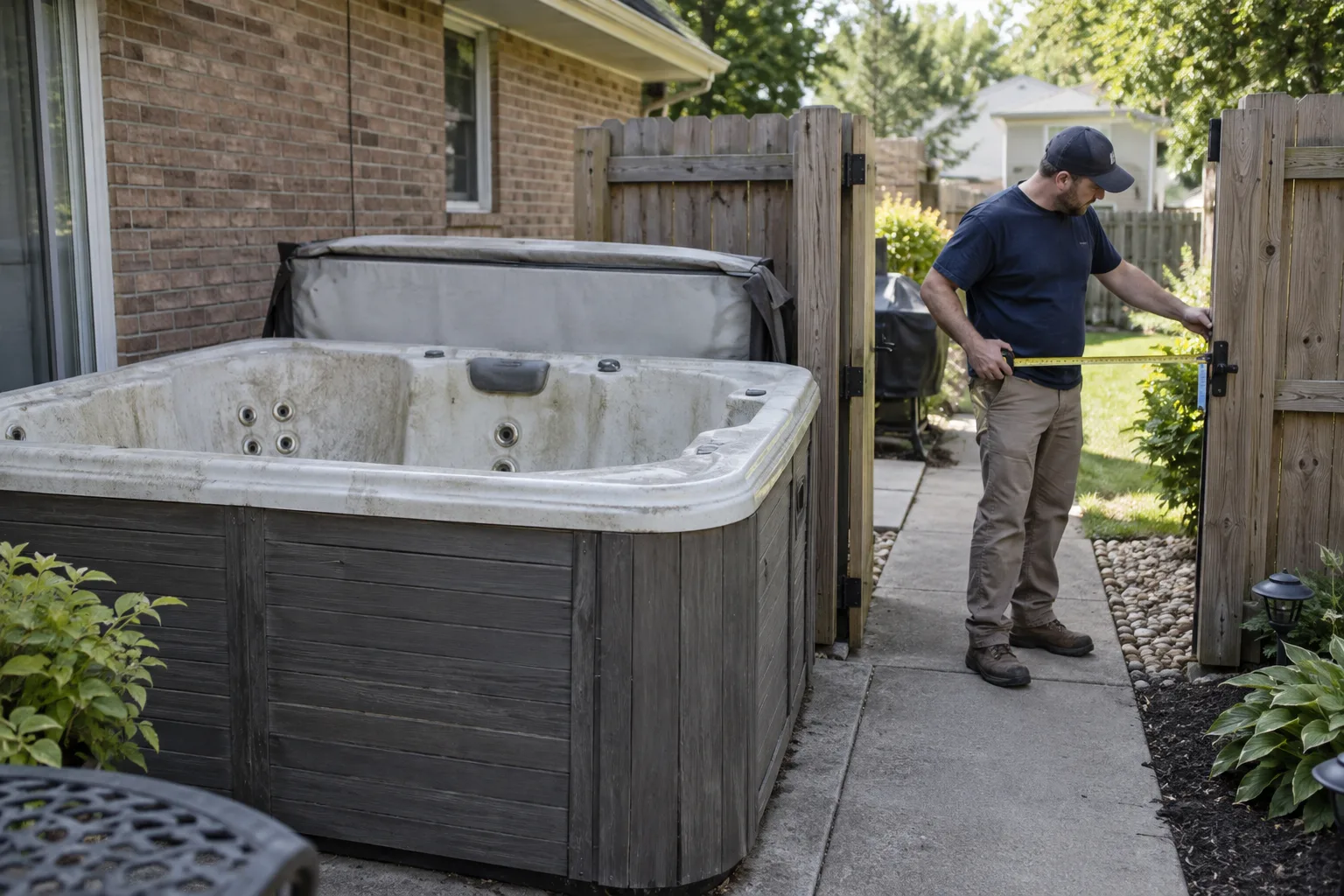
Drainage, utility disconnection, access photos, and a clear route give an estimator the information needed to plan the job. Start by confirming that the tub is drained and that permanent utilities have been disconnected by the appropriate qualified provider.
Start with utilities, not tools
A hot tub that is switched off is not necessarily disconnected. Permanent electrical, plumbing, or gas connections should be handled by the appropriate qualified provider before physical removal begins. Tell the removal company what has been disconnected and by whom. Do not open unfamiliar electrical equipment or cut unknown lines.
Drain more than the visible basin
Empty the main tub and accessible lines so water does not spill while the unit is moved or sectioned. Follow the manufacturer’s drainage guidance and local water-discharge rules. Remove filters, floating accessories, chemicals, and loose equipment that are not part of the approved removal scope.
Photograph the route
Send one wide photo of the hot tub, photos from each side, and a continuous set of views from the spa to the driveway. Include the narrowest gate or doorway, steps, sharp turns, soft ground, landscaping, overhead obstacles, and the parking area. A close photo of the shell alone cannot show the carrying plan.
Use a simple readiness checklist
Confirm: the tub is drained; utilities are disconnected; chemicals are removed; the path is clear; pets and children can stay away; gates open; and trailer access is available. Add the tub’s approximate length, width, and height. With that information, the estimator can identify whether intact removal, dismantling, or an on-site assessment makes sense.