
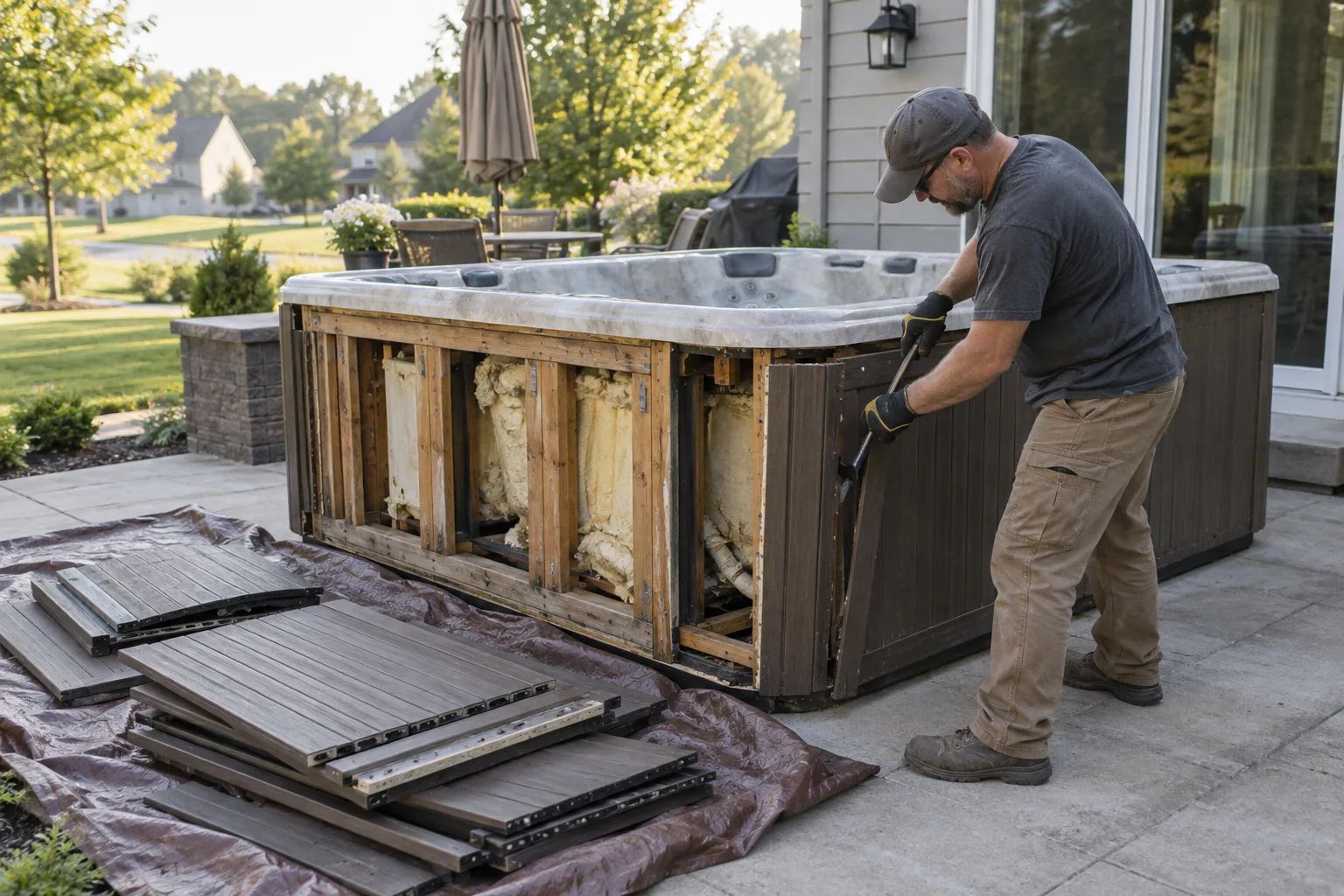
The deciding factor is often the route rather than the spa. Compare the unit’s size with every gate, doorway, turn, and surrounding structure. Start by confirming that the tub is drained and that permanent utilities have been disconnected by the appropriate qualified provider.
Intact removal needs a continuous path
An intact shell can sometimes leave when the route is wide, level, and free of tight turns. That may reduce cutting and loose debris, but it still requires a safe lifting plan and enough room to position the unit for transport.
Dismantling solves clearance problems
Sectioning can help when a tub is enclosed, recessed, indoors, or wider than the exit. The work area must still be large enough for controlled tool use, material staging, and protection of nearby finishes. Utility disconnection comes first.
Compare the boundaries
Ask what will be removed besides the spa. Deck boards, railings, privacy screens, platforms, and attached plumbing may sit outside the basic hot-tub scope. Decide what must remain and who will repair any opening after the tub leaves.
Decision table
Choose intact removal when the shell fits the measured route and the crew can move it safely. Choose dismantling when clearance, weight, or installation makes intact movement impractical. Request an on-site assessment when measurements are close, the installation is concealed, or surrounding structure may be involved.